

What if one refrigerated container could do the work of two?
07/17/2026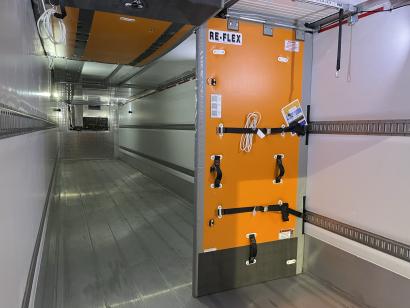
The refrigerated logistics industry is entering a new era. Across the United States, the demand for temperature-controlled transport continues to grow, driven by expanding pharmaceutical distribution, stricter food safety regulations, e-commerce, and an increasing need for rapid emergency response. At the same time, logistics providers are under pressure to reduce operating costs, improve equipment utilization and make supply chains more resilient against disruption.
This changing landscape is forcing companies to rethink traditional refrigerated transport.
A conventional reefer performs exceptionally well when transporting one type of cargo at a single temperature. However, today's supply chains are becoming increasingly complex. A distributor may need to transport frozen products alongside chilled goods, while emergency response organizations often require food, medical supplies and pharmaceuticals to arrive at the same destination under different temperature conditions. Moving these products separately increases transport movements, equipment requirements and operational costs.
The question is no longer how to keep products cold. The question is how to transport different temperature-sensitive products more efficiently without compromising product integrity.
This is where dual compartment refrigeration offers a practical solution.
The UNIT53 Dual Compartment Reefer has been developed to provide two independently controlled temperature zones within a single container. Instead of dedicating separate equipment to frozen and chilled cargo, operators can combine both in one transport movement while maintaining complete temperature separation. The result is a more flexible asset that adapts to changing cargo requirements and helps maximize equipment utilization throughout the supply chain.
Beyond the commercial benefits, this technology is becoming increasingly relevant as climate-related disasters place greater demands on emergency logistics. Hurricanes, floods, wildfires and prolonged power outages require the rapid deployment of temperature-sensitive goods ranging from food supplies to vaccines and medicines. Emergency agencies and relief organizations are looking for equipment that can respond quickly while reducing the logistical complexity of deploying multiple refrigerated units.
The UNIT53 Dual Compartment Reefer supports exactly that objective. By combining two temperature zones within a single container, companies can transport multiple product categories simultaneously, reducing the number of assets required while increasing operational flexibility when every minute counts.
Some of the key operational advantages include:
- Independent temperature control for frozen and chilled cargo
- Improved equipment utilization and fewer empty transport movements
- Lower operating costs through more efficient asset deployment
- Greater flexibility for food, pharmaceutical and healthcare logistics
- A practical solution for emergency response and disaster relief operations
These developments explain why refrigerated transport is increasingly being discussed alongside resilience and infrastructure rather than simply logistics. Cold chain assets are no longer viewed as standalone transport equipment but as critical infrastructure capable of supporting commercial supply chains as well as emergency preparedness.
This shift is reflected in two major industry events where the UNIT53 Dual Compartment Reefer will be showcased in 2026.
At the IANA Intermodal Expo in Long Beach, the focus is on improving freight efficiency, intermodal innovation and smarter asset utilisation across North America's logistics network. The dual compartment concept directly supports these objectives by enabling operators to transport more diverse cargo with fewer assets.
Only a few weeks later, the same technology will be presented at the Resilient City Expo & Disasters Expo in Houston, where governments, municipalities, emergency management agencies and infrastructure specialists come together to discuss the future of disaster preparedness. Here, the conversation shifts from operational efficiency to resilience. The ability to deploy food, pharmaceuticals and other temperature-sensitive supplies within one container demonstrates how commercial logistics solutions can also strengthen emergency response capabilities.
Although these events serve different audiences, they highlight the same industry trend: organisations are looking for flexible assets that perform beyond their traditional role.
The future of refrigerated logistics will not be defined solely by cooling performance. It will be defined by adaptability, efficiency and resilience. As supply chains become more complex and disruptions more frequent, equipment that can perform multiple functions within a single asset will become increasingly valuable.
The UNIT53 Dual Compartment Reefer has been developed with that future in mind—providing a practical solution for today's logistics challenges while supporting the evolving needs of tomorrow's supply chains.
Back to overview